 Meridian
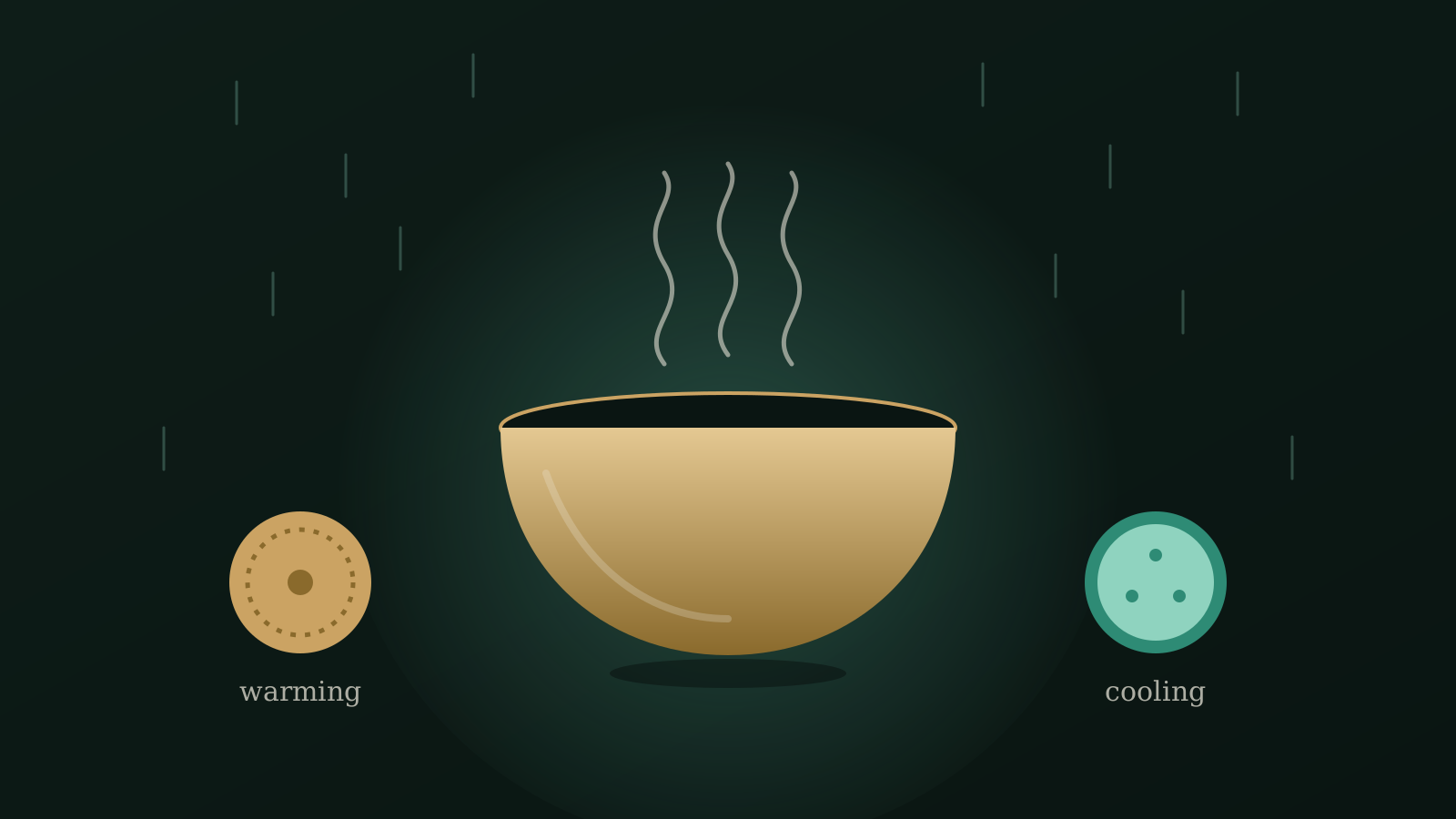
Traditional Chinese Medicine (TCM) treats food as part of health. It asks what a meal does, not only what it contains. Foods are described as warming, cooling or neutral, and meals are matched to the weather and to the person.
Warming and cooling foods
In TCM tradition, ginger and cinnamon are warming. Watermelon, cucumber and mung beans are cooling. These labels describe traditional effects, not temperature and not nutrition facts.
The tropical twist: dampness
Malaysia is hot and humid all year. TCM describes a pattern called "dampness", which is linked with a heavy feeling, bloating and sluggishness. Traditional advice for it usually includes:
- Favouring warm, cooked meals over icy drinks and raw food.
- Going easy on very sugary and greasy dishes.
- Staying active, since movement is said to keep things flowing.
- Avoiding long stretches in cold air-conditioning while wearing little.
Listen to yourself
TCM places weight on how you feel. If a food leaves you bloated or sluggish, notice it. If you feel too hot or too cold, adjust the balance of your meals. There is no single rule that fits everyone.
Be careful with herbs and soups
Herbal soups are popular, but ingredients matter. Some herbs interact with medicine or are unsuitable in pregnancy or with certain conditions. Check with a registered practitioner before using them regularly, and tell your doctor what you take.
When to see a doctor
Ongoing stomach pain, changes in bowel habits, blood in stools or unexplained weight loss need medical attention. Food advice is no substitute.
Have a food question? Ask Meri-AI for a general answer.